What is a Bartholin's cyst?
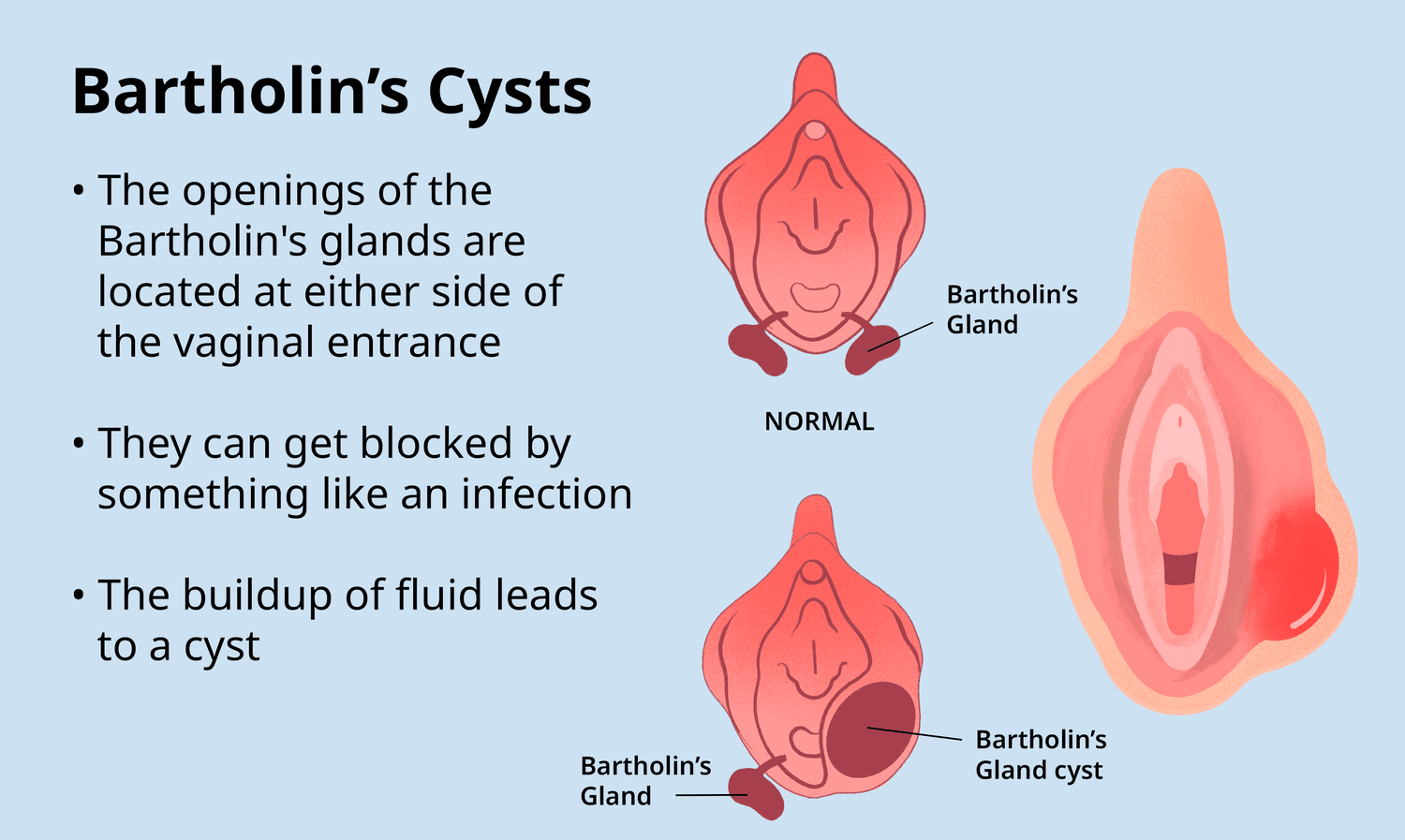
The Bartholin’s glands are a pair of small glands located on the sides of the vaginal opening. These glands produce mucus-like fluid that helps lubricate the vagina.
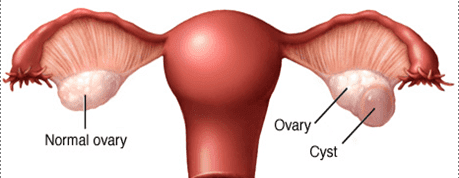
A Bartholin’s cyst occurs when the duct (the tiny tube) through which this fluid exits becomes blocked, causing fluid to accumulate and form a sac in or around the area of the gland.
The cyst may remain without causing symptoms, but sometimes the fluid can become infected and cause pain.
What causes a Bartholin's cyst to form?
The primary mechanism of cyst formation is ductal obstruction. The blockage may arise from irritation, minor trauma (such as childbirth, episiotomy, or labial injury), or infection (including sexually transmitted infections). Bacterial infection can turn a simple cyst into a painful abscess. Common culprits include Escherichia coli and sometimes organisms associated with such as gonorrhea and chlamydia.
Who is at risk of developing a Bartholin's cyst?
Women of reproductive age (especially 20–40) are most commonly affected by Bartholin’s cysts. After menopause, the glands shrink and produce less fluid. If a woman has had a Bartholin’s cyst in the past, the risk of recurrence is higher.
What are the symptoms of a Bartholin's cyst?
When the cyst is small and uncomplicated, there may be no symptoms at all and it may be discovered incidentally during an exam. If symptoms are present, they may include a painless lump on one side of the vulva. If the cyst enlarges, it may cause discomfort when walking, sitting, or engaging in sexual intercourse. If the cyst becomes infected, signs can include redness, warmth, swelling, tenderness/pain, fever, and possible abscess drainage.
How is a Bartholin's cyst diagnosed?
Diagnosis of a Bartholin’s cyst is typically based on physical examination. Your healthcare provider will look at the vulva and check for characteristic swelling or a lump on one side of the vaginal opening. If infection is suspected, swabs for bacteria/sexually transmitted infections may be performed.
How is a Bartholin's cyst treated?
If a Bartholin’s cyst is small, painless, and not infected, no specific treatment is needed. Home care may include warm sitz baths (soaking in warm water several times daily) to relieve discomfort and possibly promote drainage.
When a cyst is bothersome, large, painful, or infected, active treatment is needed and may include:
- antibiotics: if infection is present or STIs are involved, antibiotics can be started until drainage can be scheduled
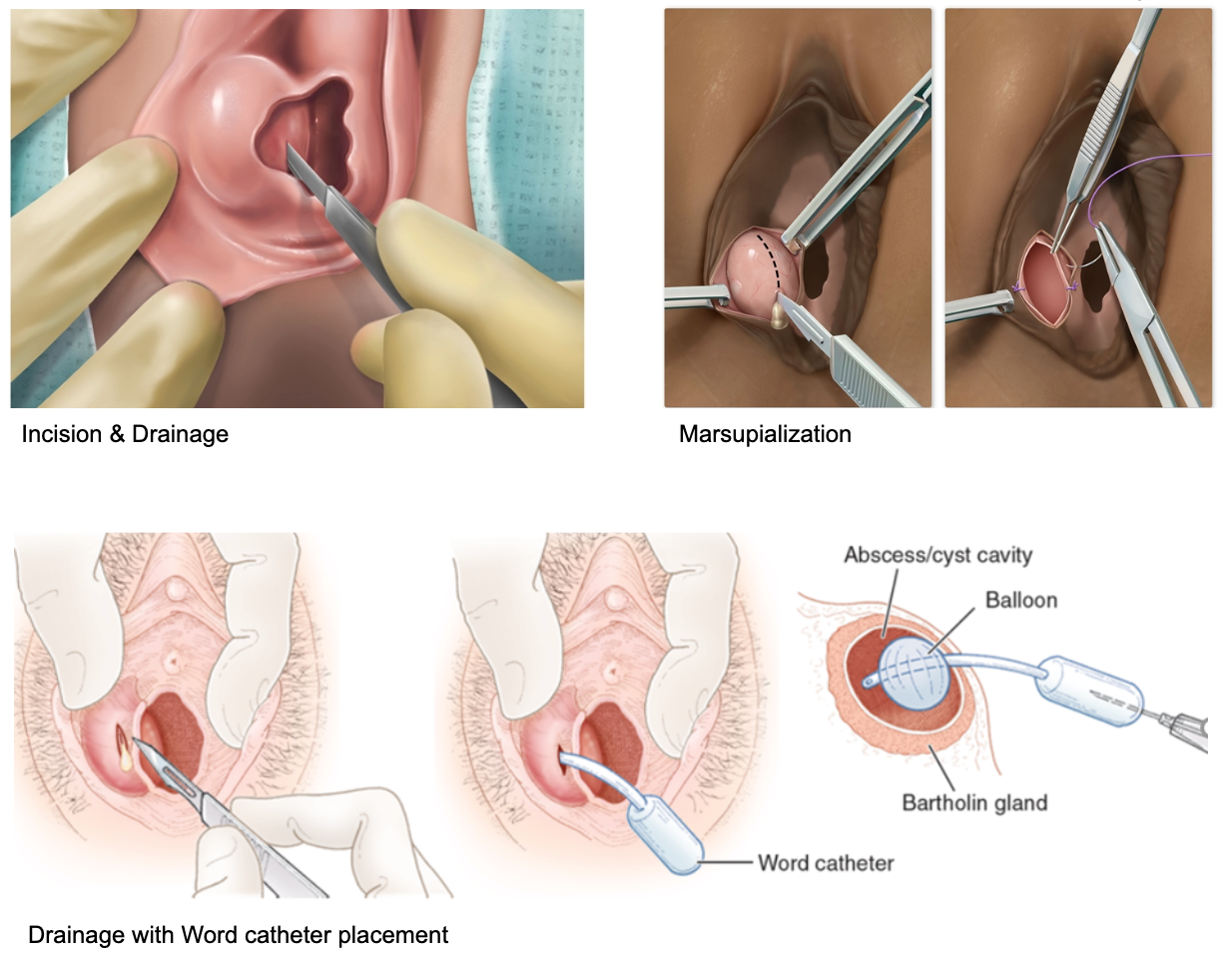
- incision and drainage: a minor procedure to open and drain the cyst/abscess; has a higher risk of recurrence
- insertion of a Word catheter: following incision and drainage, small balloon catheter is placed into the cyst cavity to keep the tract open, allowing ongoing drainage and reducing the chance of recurrence
- marsupialization: a procedure performed in the operating room where the cyst wall is opened and sutured so it remains open permanently, creating a new drainage path
- excision of the gland: may be considered in cases of repeated recurrences or if malignancy is suspected
What is the long-term outcome following ?
Nearly all women with a Bartholin’s cyst recover completely with appropriate treatment and experience no long‐term problems. Recurrence of a cyst is possible, however, especially if the duct remains blocked or treatment was purely drainage.
While a Bartholin’s cyst does not cause cancer, a vulvar lump may actually represent a Bartholin’s gland carcinoma (a very rare form of vulvar cancer which develops in the gland itself). This is a very rare cancer and is typically found in older women, especially over the age of 40.
When should I see my healthcare provider?
It is recommended that you see your healthcare provider if you experience any of the following:
- a new lump or swelling near the vaginal opening
- pain, redness, warmth, or fever with a vulvar lump
- difficulty walking, sitting, urinating, or having sex because of a vulvar lump
- a new vulvar lump over the age of 40