What is the umbilical cord?
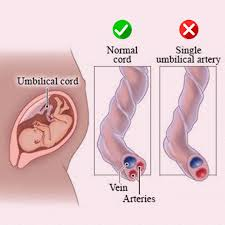
The umbilical cord consists of two arteries and a vein surrounded by protective tissue. It is attached to the fetus at the umbilicus (bellybutton). The other end embeds itself into the placenta which is attached to the wall of the mother’s uterus. This unit facilitates the transfer of nutrients and oxygen from mother to the developing child and waste products like carbon dioxide from fetus to the mother for elimination. This exchange occurs via diffusion (the passage of molecules or substances across a cell membrane) without blood from the mother and fetus ever mixing.
What types of umbilical cord problems can occur during pregnancy?
There are a variety of umbilical cord problems which can occur during pregnancy. These include:
- structural defects (abnormal cord length, single umbilical artery
- abnormal insertion (marginal cord insertion, velamentous cord insertion)
- location problems (vasa previa, funic presentation)
- entanglement issues (nuchal cord, true knot)
What is an abnormal umbilical cord length?
The length of an umbilical cord is very important to the health and well-being of a developing fetus. Cords that are too short or too long can cause problems. On average, the umbilical cord should be approximately 32cm long at 20 weeks gestation. From that point forward, it should grow at a steady rate and reach a final length of 60cm by 40 weeks gestation. There is some variation in length depending on the height, size, and weight of the mother.
Short umbilical cords have been associated with various issues including lack of oxygen and nutrients, placental abruption, decreased fetal movement, fetal distress, low APGAR scores, low birth weight, and psychomotor abnormalities. There is also an increased risk of cesarean delivery for failure to descend during the second stage (pushing) of labor.
If the umbilical cord is too long, it can lead to other complications, particularly during delivery. Long cords are more likely to result in emergency events such as fetal entanglement, cord prolapse, and a cord knot. All of these events can deprive the baby of oxygen and result in serious brain injuries.
What is a single umbilical artery?
A single umbilical artery occurs when an umbilical cord contains only one artery and one vein rather than two arteries and one vein. Found in 0.5%–6% of pregnancies, this "two-vessel cord" often results in normal, healthy babies but can be associated with fetal growth restriction or congenital anomalies.
What is abnormal cord insertion?
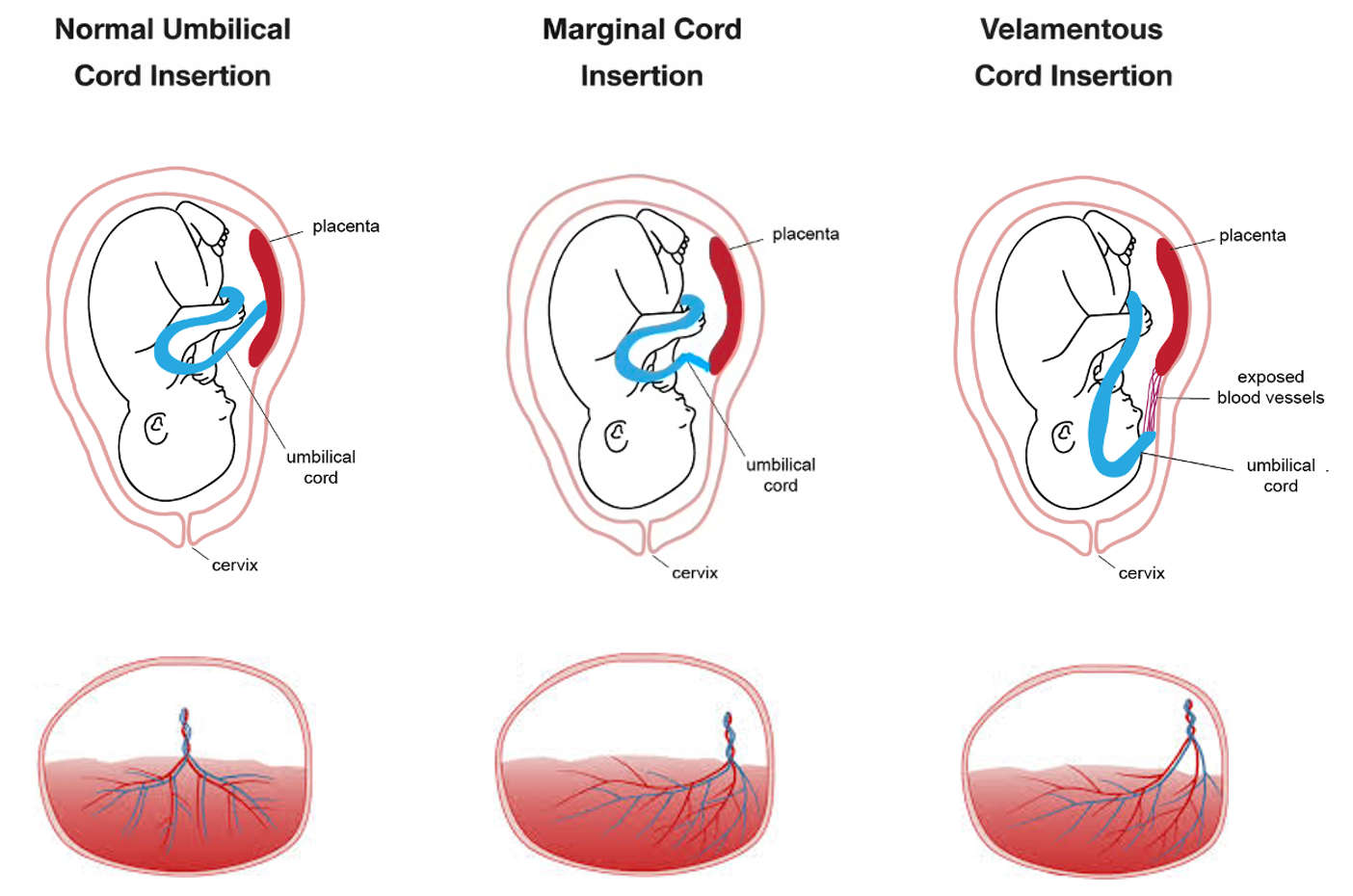
Normally, the umbilical cord attaches to the center of the placenta. Sometimes, however, it can insert in an abnormal location.
In a marginal cord insertion, the umbilical cord attaches to the edge of the placenta instead of the center. The placenta is thinner at the edges, and therefore less able to structurally support the cord. The growth of the fetus is dependent upon the heartiness of the placenta, thus fetal growth restriction may occur. Additional may include high maternal blood pressure, vascular compression, and thrombosis. Marginal cord insertion occurs in approximately 8.5% of all pregnancies.
In a velamentous cord insertion, the umbilical blood vessels insert into the amniotic sac instead of the placenta. This type of abnormal cord insertion is less common, occurring in only 0.5% to 2.4% of all pregnancies, but is more dangerous as the vessels of the umbilical cord are partially removed from their usual protective covering. There is a high risk of hemorrhage or blood loss due to these blood vessels being unprotected by umbilical tissue. Additionally, pregnancies with this condition may be associated with fetal growth restriction, high maternal blood pressure, vascular compression, and thrombosis.
What is a vasa previa?
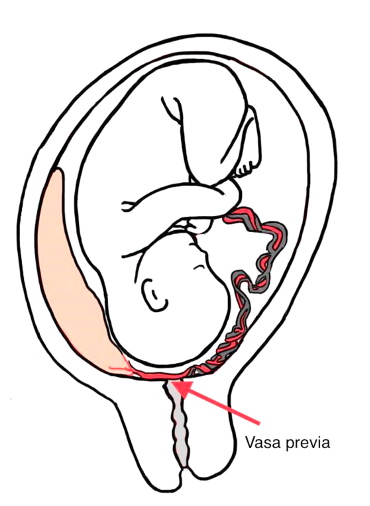
Vasa previa is a rare, dangerous complication which can occur in the setting of a velamentous cord insertion. In this condition, the fetal blood vessels are contained within the part of the amniotic sac directly above the cervix, unprotected by the umbilical cord. The vessels are fixed in place and will not move. As a result, these delicate vessels can tear or burst if the cervix dilates or membranes rupture, causing life-threatening fetal hemorrhage. This condition occurs in 1 in 2,500 to 5,000 pregnancies.
What is a funic presentation?
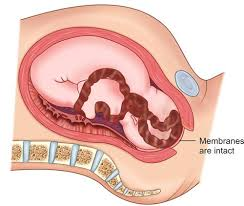
Funic presentation refers to an abnormal positioning of the umbilical cord right above the cervix. It differs from vasa previa in that the vessels are not exposed and the cord is mobile and can move. The position of the umbilical cord changes throughout pregnancy as fetal movement occurs. Funic presentation is only considered a problem if it persists after 32 weeks gestation. If labor begins or membranes rupture with a funic presentation, life-threatening umbilical cord prolapse will occur.
What is a nuchal cord?
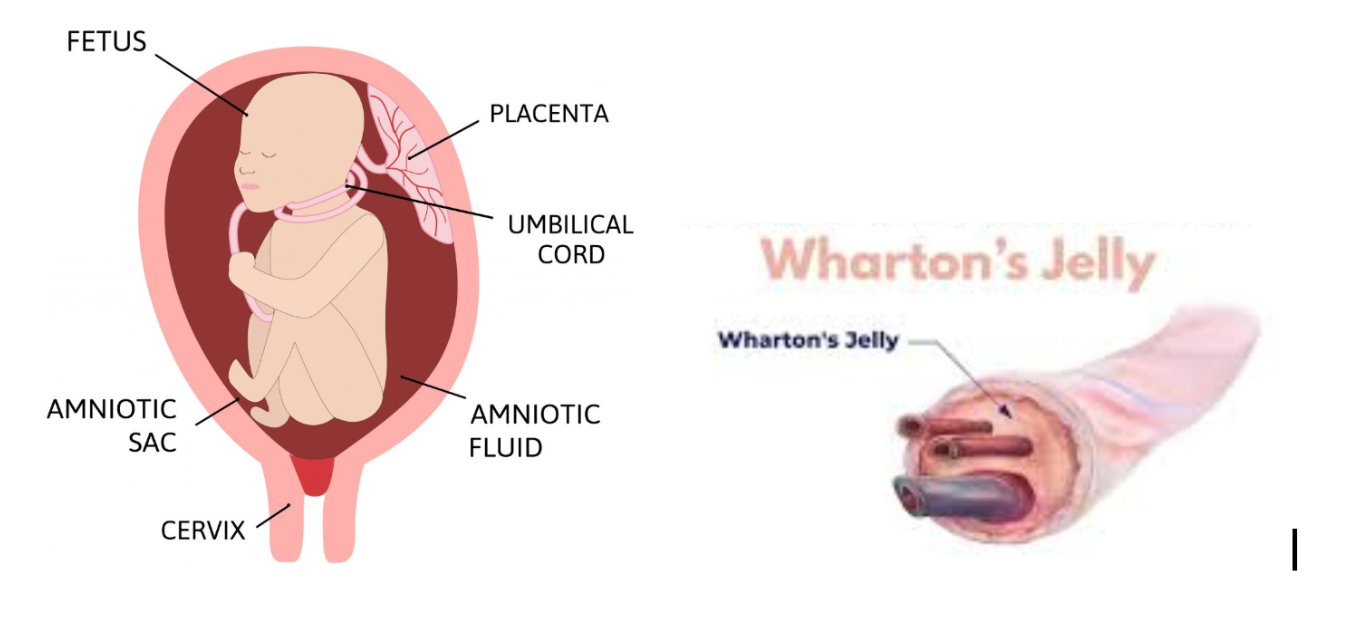
Nuchal cord is the medical term for when the umbilical cord becomes wrapped around the neck of the baby inside the uterus. It occurs when the baby moves around inside the uterus, causing the cord entanglement. It can be loose or tight and single or multiple loops. While this sounds frightening, the umbilical cord can get wrapped around the baby's neck several times without causing any harm at all. This is because the vessels of the cord are protected in thick layers of connective tissue (Wharton’s jelly) which prevents compression. Most babies with a nuchal cord are delivered normally without any problems and the doctors simply unloop the cord from around the neck at the time of birth. Nuchal cord is common (seen in 10 to 30% of pregnancies) and is not a dangerous condition.
What is an umbilical cord knot?
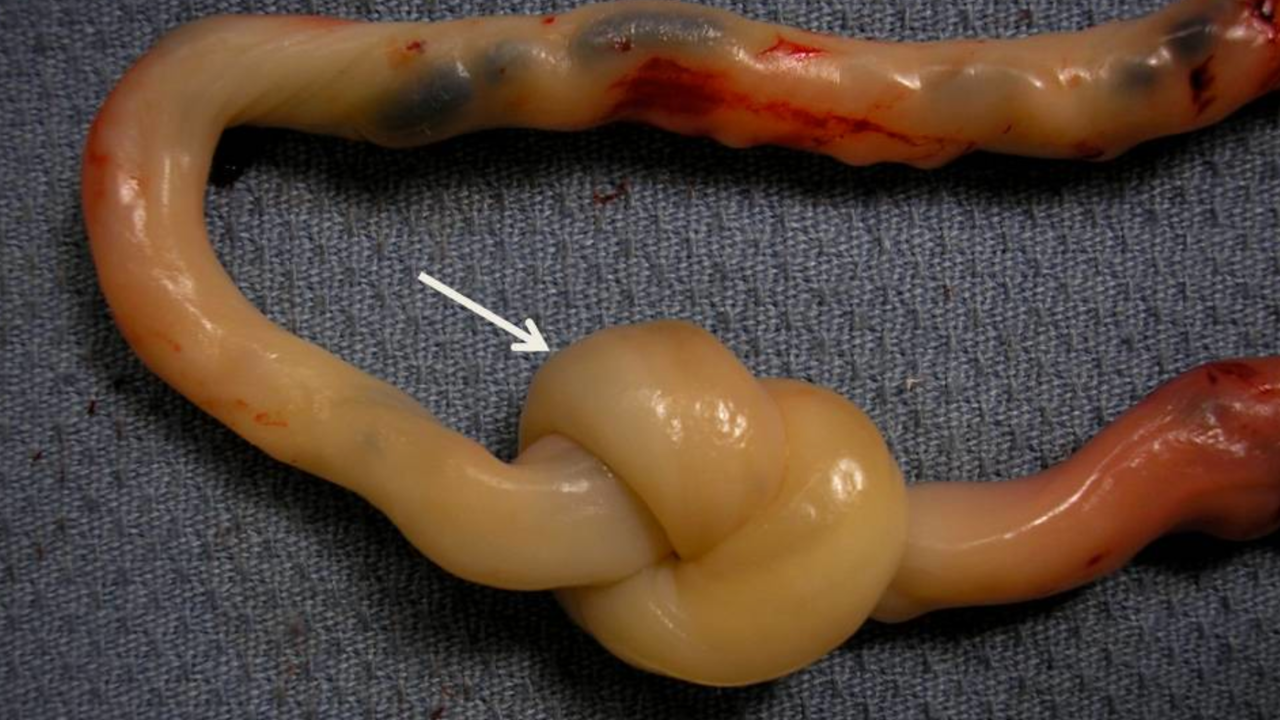
A knot in the umbilical cord is exactly what the name implies - the cord twists around and interweaves itself into a knot. Just like nuchal cord, knots in the umbilical cord are caused by fetal movement inside the womb. Most knots in the cord turn out to be relatively loose and come undone easily. However, some umbilical knots can become very tight and problematic. A particularly tight umbilical knot may prevent oxygen and nutrients from reaching the baby. A tight knot may even restrict blow flow and cause death. The infant mortality rate for an umbilical cord knot is around 10% which means 1 in 10 babies affected by a cord knot will die from perinatal hypoxia.
What causes an umbilical cord problem and can it be prevented?
Umbilical cord problems happen without any warning. There is no reliable way to predict or prevent them, but certain factors increase the risk such as:
- Pregnancy with twins
- Use of artificial reproductive technology, such as in vitro fertilization (IVF)
- Maternal chronic disease such as hypertension and diabetes
- Maternal age over 35
- Smoking or drug use during pregnancy
How is an umbilical cord problem diagnosed?
Umbilical cord problems do not procedure any symptoms which would be experienced by the mother. The diagnosis is typically made during routine ultrasound testing throughout pregnancy when your doctor evaluates the placenta and umbilical cord thoroughly. If an umbilical cord problem goes undetected, complications may occur during pregnancy and emergencies may occur during delivery.
What are the risks with having an umbilical cord problem?
When problems involving the umbilical arise during pregnancy or during labor, they can present very real dangers including:
- fetal growth restriction
- need for preterm delivery (before 37 weeks gestation)
- need for c-section delivery
- fetal distress, hypoxia, and death
- blood transfusions
- pre-eclampsia
- placental abruption
What monitoring is performed if I have an umbilical cord problem?
If an abnormal cord insertion is detected, your physician will likely:
- monitor fetal growth more closely with serial ultrasounds
- conduct non-stress tests or biophysical profiles later in pregnancy
- discuss delivery planning
- consider early delivery
- admit you to the hospital for bedrest and planned cesarean delivery (vasa previa, funic presentation)
The good news is that with modern prenatal care, most babies with abnormal cord insertions are born healthy.
Does having an umbilical cord problem mean I cannot have a vaginal delivery?
No! With a majority of umbilical cord problems, a vaginal delivery is not only possible, but safe. However, during prenatal care, some complications from an abnormal umbilical cord may lead to a cesarean section in some cases.
A vasa previa and a funic presentation, would require a cesarean section to prevent maternal and fetal death.
What should I do if I am diagnosed with an umbilical cord problem?
First, don’t panic. Many women with abnormal cord insertions go on to have completely normal pregnancies and deliveries. If you’ve been diagnosed with this condition:
- attend all prenatal visits and follow your doctor’s recommendations
- watch for signs of preterm labor, vaginal bleeding, or decreased fetal movement
- ask questions and stay informed about your baby’s growth and health
Get In Touch